

Flag football is the fastest-growing youth sport in America, and for good reason. It’s accessible, inclusive, and teaches the fundamentals of football without the injury risk of tackle. The NFL is expanding flag football programs rapidly, creating real opportunities for young athletes who embrace the game. But here’s the catch: flag football requires a different approach to drilling and development.
Traditional tackle football drills don’t always translate because the game itself has different dynamics. We cover flag football drills that build legitimate football skills while maximizing success in the flag game.
Why Flag Football Needs a Real Practice Plan
Some coaches treat flag football like a casual version of tackle football, which is a mistake. Flag football is its own game with specific skills, spacing, and strategy. Young athletes deserve a structured practice that develops these unique skills properly.
The good news is that flag football actually teaches some fundamentals better than tackle football. Without the physicality, players focus more on reading defenses, ball security, footwork, and spacing. The lack of contact also means coaches can run more reps with less fatigue and injury risk. A solid flag football practice plan develops real quarterback mechanics, receiver separation, defensive coverage concepts, and decision-making—all the things that transfer to tackle football or professional flag programs.
Flag Pulling Drills: The Most Undercoached Skill
Here’s where flag football separates the good teams from the great ones: defensive flag pulling. Many coaches under-practice flag pulling, treating it like a minor skill. It’s not. Consistent, effective flag pulling is the foundation of flag football defense.
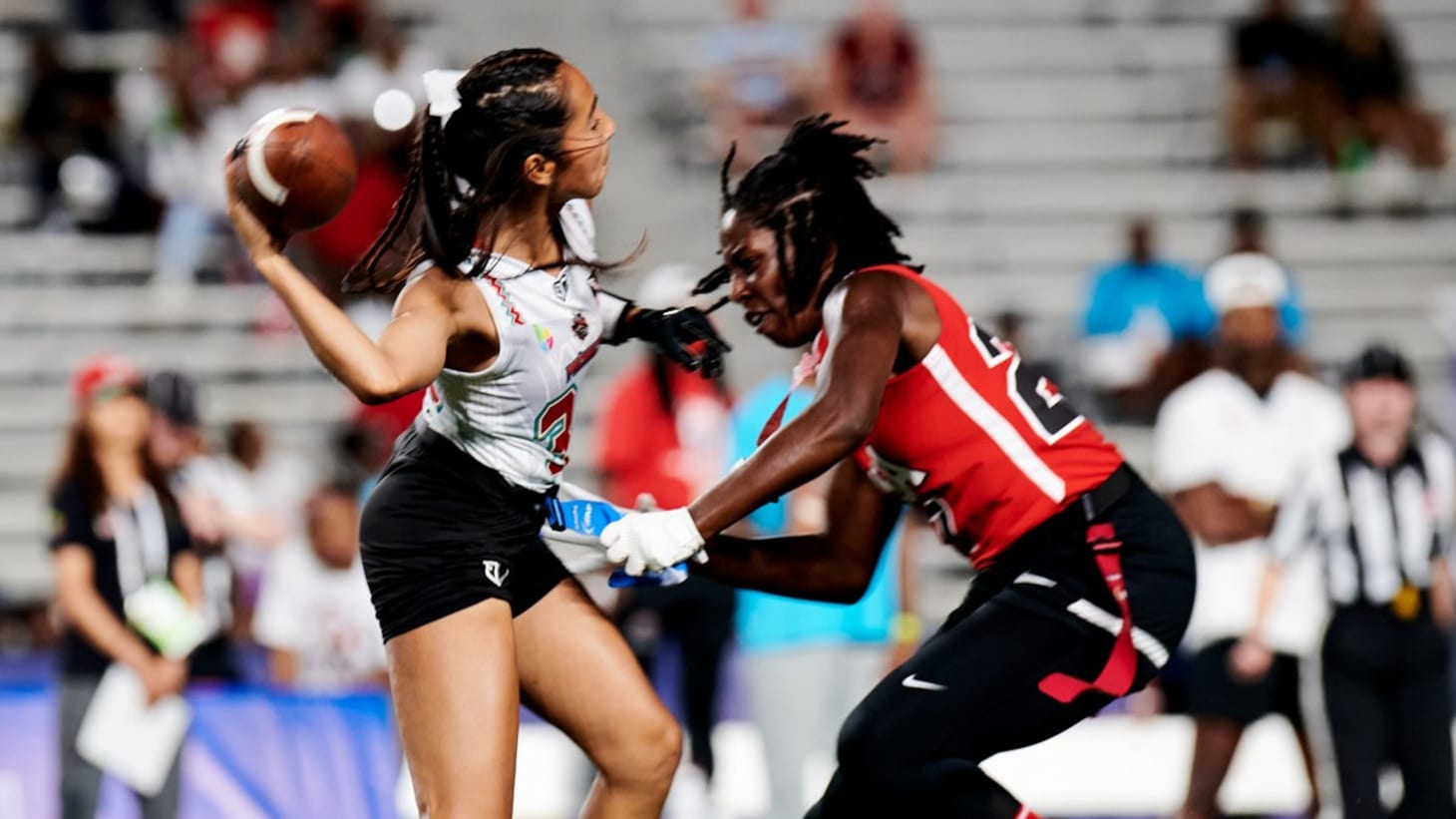
Stationary Flag Grab Drill
Have a player stand with the flag ball (or wear flags on the belt). A defender approaches from the front, side, and behind, practicing clean flag pulls. The objective is a smooth, controlled grab that stops the runner. Start slow to focus on technique: approach the ball carrier at an angle, keep eyes on the flags, and pull with conviction.
Flag Pull Gauntlet
Line up five receivers sprinting in different patterns. Defenders are spaced out, each responsible for pulling flags from their assigned receiver. This builds repetition and teaches defenders to anticipate where runners will be. Start at slower speeds, then increase.
Reaction Flag Pull
A receiver gets a 5-10 yard head start, then accelerates. Defenders react to the run and pursue, practicing the angles and speed needed for effective flag pulls. This is more game-like and teaches defenders to close space quickly.
Route Running Drills for Flag Football
Route precision matters more in flag football because players must create quick separation and be in exact spots to catch passes. Flag fields are smaller, so routes are tighter and timing is critical.
Speed Route Progression
Receivers run routes against no defense first to establish footwork and timing. Then add a defender who can contest but not tackle. Finally, add game-speed defenders who pull flags. This progression builds confidence and technique before full-game intensity.
Shallow Cross and Quick Slant Routes
These short, crisp routes are staples of flag football. Set up cones to mark exact depths and breaks. Receivers run the same routes multiple times, with a QB throwing on time. Consistency builds confidence, and accurate execution creates easy completions.
Red Zone Route Drills
Inside the 10-yard line, field space is compressed. Receivers must work in tighter areas, breaking routes at sharper angles. Set up cones to simulate the endzone boundary and practice routes that create separation in tight spaces.
QB and Snap Mechanics for Flag Football
Quarterback play is fast-paced in flag football. Snaps must be clean, and QB mechanics must be clean. Faster tempo means less time for reads, so accuracy and decisiveness are premium skills.

Snap Exchange Drill
Practice snaps from center repeatedly. QB under center, center delivers the ball cleanly, QB gets into their stance. Do fifty snaps focusing only on the exchange. This builds trust and eliminates hesitation.
Three-and Five-Step Mechanics
Flag football plays are short and quick. QBs practice three-step drops for screens and short timing routes, and five-step drops for intermediate plays. Fewer steps, faster release. Footwork must be sharp to get off accurate throws.
Hot Route Drill
Against a blitz, receivers run ‘hot routes’—quick, predetermined breaks designed to get open immediately. QB and receiver practice timing on these high-pressure plays. Practice blitz looks and hot route recognition so QBs make pre-snap reads correctly.
Net Drill (Accuracy without receivers)
QBs throw at a net with targets marked for different route depths. This builds accuracy for touch passes needed in flag football, where defenders are right there and ball placement matters.
Defensive Coverage Drills for Flag Football
Defense in flag football is about positioning and recognition, not physical dominance. These drills teach defensive reads and coverage.
Read and React to Receivers
Align defenders in coverage looks (man, zone, or combination) and run receivers through various routes. Defenders react to the receiver’s break point and stay in position to pull flags when the ball arrives. Emphasize staying patient and controlled rather than aggressive.
Man Coverage Drill
A defender is assigned one receiver in man coverage. The receiver runs various routes, and the defender mirrors them, maintaining proximity without fouling. This teaches footwork, hip rotation, and situational awareness.
Zone Coverage Fundamentals
Defenders align in a zone (e.g., Cover 2, Cover 3). Receivers run routes through the zones. Defenders rotate to their responsibilities, communicating and staying synchronized. This teaches spatial awareness and timing.
Blitz Recognition Drill
Receivers recognize defensive looks and adjust hot routes accordingly. Linebackers and safeties practice timing blitzes so they reach the QB at the moment of release. Timing is everything in flag football blitzes.
7-on-7 Game Drills That Simulate Real Situations
Seven-on-seven scrimmages are the flag football staple. Design drills that mirror game situations.
Red Zone 7-on-7
Start at the 20-yard line. Offense gets four downs to score; defense tries to hold. Repeat multiple possessions. This teaches situational football, pressure decision-making, and defensive urgency in tight spaces. Players experience real-game scenarios.
Hurry-Up Drill
Two-minute drill with the clock running. Offense must score quickly with no timeouts. This forces tempo and teaches efficient play calling. Defensive teams learn to organize quickly against no-huddle situations.
Balanced Offense Scrimmage
Run plays that require balance: passes, runs, screens, and perimeter attacks. Offensive players execute diverse routes and assignments. Defensive teams practice reacting to varied looks instead of predictable patterns.
Defensive Pressure Situations
Design 7-on-7 situations where the defense is down by a score with limited time. This forces defenses to be aggressive (controlled blitzes) while maintaining coverage integrity. Teaches situational adjustments.
Evaluate Flag Football Athletes Accurately
Evaluating a flag player requires a different lens than tackle. You aren’t looking for “power”; you’re looking for twitch, spatial awareness, and pull-efficiency. At TeamGenius, we know that football evaluations aren’t one-size-fits-all. Our mobile app allows you to create specific criteria for your tryouts. You can track stats like “Pull Percentage” and “Route Precision” just as easily as you would a 40-yard dash. When you have the data to see who your most efficient flag-pullers are, you can build a defense that is impossible to score on.
Ready to bring elite data to your flag football organization?
See How TeamGenius Powers Flag Football Evaluations.
Frequently Asked Questions
Flag pull drills, route running progression drills, snap mechanics drills, and 7-on-7 scrimmages are the cornerstones. Combine position-specific work (QB mechanics, receiver routes, defensive coverage) with game-speed drills. Focus on the unique skills flag football demands: clean flag pulling, spacing, and quick decision-making.
Start with stationary targets, where defenders practice pulling flags cleanly. Progress to slow-speed runners, then game-speed. Emphasize angle of pursuit, staying in lane, and confidence in pulling the flag. Make it a point of pride—defenders should want to be known for great flag pulling.
Footwork, spacing, route precision, and flag pulling fundamentals. Players should understand their position’s role in spacing and recognize defensive coverages. QBs need accuracy and quick decisions; receivers need to create separation in tight spaces; defenders need positioning and clean flag pulling. Foundation skills matter in flag football because everything happens faster.
Flag football evaluation focuses less on size/physicality and more on agility, field intelligence, and technical accuracy. Speed, footwork, and decision-making are premium. Players who make smart reads, create separation quickly, and pull flags consistently are stars in flag football. Evaluation is cleaner too—no hidden contact or judgment calls; it’s about who makes plays.
Leave a Reply